Pirates and Privateers Pirates and Privateers
The History of Maritime
Piracy
Cindy Vallar, Editor
& Reviewer
P.O. Box 425,
Keller, TX 76244-0425

Win, Lose, or Draw
Law & Order: Pirate Edition (part 9)
by Cindy Vallar

Judge pronouncing judgment
(Source: Shutterstock.com)
In May 2011, Spain’s Audiencia Nacional
pronounced a harsh sentence for two Somali
pirates, Cabdullahai Cabduwily (also known
as Abdu Willy) and Raageggesey Hassan Aji,
for an incident that occurred two years
earlier: 439 years. These two pirates had
participated in an attack on the Basque
fishing trawler Alakran, while she
was in the Indian Ocean. After the pirates
captured the vessel and her crew of
thirty-six, these two Somalis left in a
skiff and were captured by a rescue ship,
after which they were flown to Spain under
arrest. The remaining pirates still aboard Alakran
demanded their release and maintained a
siege of the trawler and her crew for
forty-seven days. At one point, the pirates
“fired a rocket-propelled grenade into the
water and fired guns into the air to ward
off a Spanish navy frigate that was
shadowing it.” (Groves)
Cabduwily and Aji were eventually charged
with thirty-six counts of illegal detention
and one count of violent robbery and
intimidation because weapons were used.
According to Cabduwily, they were fishing
when pirates kidnapped them, blindfolded
them, and took them aboard the trawler. Once
there, the pirates gave them weapons and
forced them to participate or suffer severe
consequences.
During the trial, Captain Ricardo Blach
called these two pirates “the lords and
masters of the boat.”
They boarded us firing shots
and made us lie face down . . . they
gave me a terrible beating. It was a
terrible night of violence. We feared
for our lives. (Pirates were)
 It was also learned that Deputy Prime Minister
María Teresa Fernández de la Vega’s
statement that “Spain did not pay any ransom
money,” was false. (Pirates’) The ransom was
alleged to be 2.7 million euros (US $3.3
million in 2011), which the court said was
paid. It was also learned that Deputy Prime Minister
María Teresa Fernández de la Vega’s
statement that “Spain did not pay any ransom
money,” was false. (Pirates’) The ransom was
alleged to be 2.7 million euros (US $3.3
million in 2011), which the court said was
paid.
Even though the pirates were sentenced to
439 years in prison, “court officials have
indicated that the maximum time each will
serve will likely not exceed 30 years.”
(Spain)
When Kenya removed itself from contention as
a site for piracy trials, the Republic of
Seychelles stepped up to the plate. Their
National Assembly enacted tough legislation
against piracy that allows officials to
prosecute pirates regardless of where they
commit their crimes. They can even try those
who are only suspected of being pirates. The
sentences handed down can be “draconian.”
According to the president,
I know that we were one of
the first countries in the world to come
up with a tough legislative framework to
fight piracy but it was necessary. We
were courageous enough to do it – we had
to deal with piracy wherever we found it
on the high seas. And I think it has
proved to be a wise decision and we have
been able to play a pivotal part in
dealing with piracy. (Boyle, 63)
Since
2010 when the legislation was put in place,
Seychelles’ courts have tried more than 150
pirates. A convicted pirate might receive a
sentence of thirty years and pay a fine of
one million rupees. The shortest jail
sentence imposed has been one and one-half
years, while the longest has been
twenty-four. No fines were assessed.
One incarcerated pirate was Mohamed Hassan Ali,
who came from Mogadishu. At his sentencing,
the judge said, “I will do you a favour and
give you twenty-one years’ imprisonment.”
(Boyle, 88) The judgment came about over an
incident involving a fishing trawler called
Tahiri. In early January 2021, HDMS Absalon
was patrolling off Somali’s coast as
part of EUNAVFOR ATALANTA
(European Union Naval Force Operation
ATALANTA). The Danish warship was tasked
with checking out the trawler after an
anti-piracy helicopter surveilled those
aboard acting suspiciously. Instead of
stopping as ordered, those working aboard Tahiri
pointed weapons at the warship and at
people on deck whom the warship assumed were
hostages. Navy personnel also took footage
of weapons being dumped overboard. Only
after warning shots were fired did the
suspected pirates stop and Absalon sent
over a boarding party. They found fourteen
hostages, “[s]kiffs and powerful outboard
engines, together with hook and rope ladders
and booster charges for rocket-propelled
grenades” – items that suggested this
trawler served as a mother ship from which
pirates sortied to attack unsuspecting
vessels navigating nearby waters. (Ali) The
Danish navy arrested the suspected pirates,
but in the end, only eight stood trial (four
were tried in the Seychelles and four in
Kenya). The remaining seventeen Somalis were
released because no one agreed to prosecute
them.
According to the Report of the Social
Adviser to the Secretary-General on Legal
Issues Related to Piracy off the Coast of
Somalia, “[a]s of May 2010, more than
9 out of 10 captured pirates have not been
prosecuted. Formerly, only certain navies
opted to immediately release the pirates,
destroying the skiffs and weapons. That
practice has now become the rule, and
judicial prosecution the exception. From
mid-August to mid-December 2010, the command
of the Atalanta force captured 51 pirates
who were immediately freed.” (Letter, 21)
Those that entered the Seychelles’ judicial
system were charged with two counts of
piracy, although one was dropped when none
of the hostages were found to substantiate
that charge. The four were convicted of
“voluntary participation in the operation of
a ship with knowledge of facts making it a
pirate ship.” (Ali) While Ali and two of his
fellow pirates were sentenced to two decades
in Montagne Posée Prison, the fourth’s
sentence was only fourteen years because of
his age. Ali and his comrades always claimed
their innocence and their lawyer filed an
appeal because
1. The Judge erred in
convicting the appellants on a defective
charge which did not state the element
of common intention as per s 23 of the
Penal Code.
2. The Judge erred in law and in fact in
concluding that the four appellants had
participated in the act of piracy in the
high seas.
3. The Judge erred in law and in fact in
concluding that the four appellants had
knowledge of the fact that the ship that
they were using was a pirate ship.
4. The conviction of the second
appellant was unsafe and unsatisfactory,
as the Judge failed to ensure that the
sanction of the Attorney-General had
been granted before prosecuting the
first appellant, who was a minor at the
time the offences were committed.
5. In all the circumstances of the case,
the conviction of the four appellants
was unsafe and unsatisfactory.
6. The sentences were manifestly harsh
and excessive and wrong in principle.
(Ali)
Seychellois
authorities accepted Ali’s case for
prosecution based on universal jurisdiction,
which is permitted by the country’s penal
code. To convict the suspects, however, the
prosecution had to prove three elements: a)
the ship in question (i.e., the trawler) was
actually a pirate ship; b) that those
arrested were the ones in control of the
ship; and c) the accused willingly
participated and knew that the vessel was a
pirate ship.

While it is not necessary that a ship
fly ‘The Jolly Roger’ for it to be
inferred that it is a pirate ship, the
Court must still find evidence that the
appellants had knowledge that the ship
they were on board was operating as a
pirate ship. (Ali)
This would have happened if the Somalis had
confirmed what the Danish naval personnel
said they saw and found. But none of the
suspected pirates testified during the
trial. There was no question that the Danes
saw and witnessed what they did, which
confirmed “that some or all the Somalis”
knew this was a pirate ship on a plundering
cruise, but the prosecution could not “tie
the appellants with the whole group of
Somalis in control of the Tahiri.”
(Ali)
From the court’s perspective, just because
the equipment and weapons suggest piracy,
“[t]he presumption of equipment articles are
not contained in the customary international
law of piracy, nor in UNCLOS or domestic
legislation.” (Ali) Therefore, the appeals
court must find that the Somalis may have
known that the trawler was a pirate ship,
but the prosecution could not prove that
these men actually controlled the ship and
intended to plunder other vessels. Nor was
any evidence submitted that the Somalis were
not the actual owners of Tahiri.
Therefore, in December 2014, the judges
hearing the appeal vacated the convictions,
and Ali and the others were released.
While these defendants were ultimately
exonerated, the navies who participate in
anti-piracy patrols continue to work toward
bringing pirates to justice. On rare
occasions, the participants’ interpretation
of justice may hearken back to an earlier
age.
Under normal circumstances, if Russia
convicts a suspected pirate, that person
will spend up to fifteen years in jail and
pay a fine of $15,000 (about 1,182,000
rubles). But Russia has not tried any Somali
pirates. Representatives of that nation
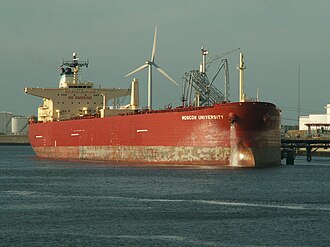
chose a different tactic in 2010 when ten
Somalis seized Moscow University,
which was laden with $50,000,000 in crude
oil. The twenty-three Russian crew members
barricaded themselves in a safe room within
the engine room, while the pirates were
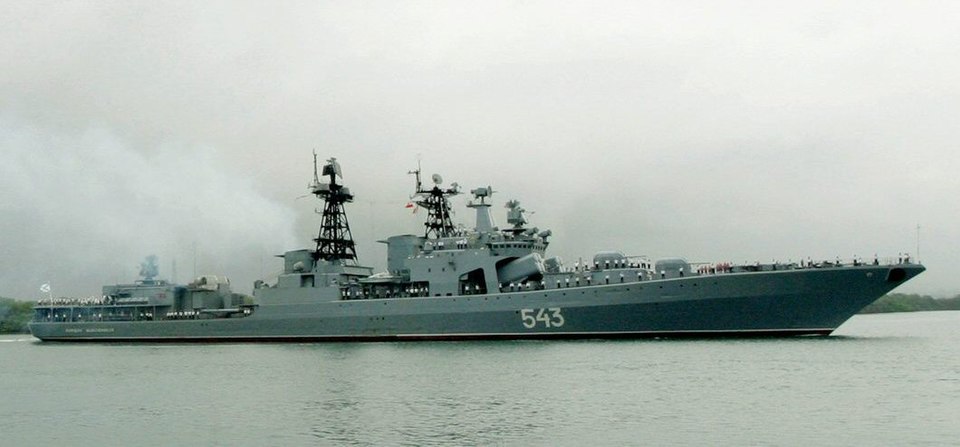
aboard. After the pirates fired on Marshal
Shaposhnikov, a destroyer, the
Russians sent marines aboard to capture the
pirates and free the crew. The pirates were
to be flown to Moscow for trial, but Colonel
Alexei Kuznetzov said “imperfections in
international law” resulted in the Russians
releasing them “in an inflatable boat
without navigational equipment.” Contact was
lost an hour later, and Russia Interfax news
agency said on 12 May that “It seems that
they all died.” (Russian) President Dmitri
Medvedev said, “perhaps we should get back
to the idea of establishing an international
court and other legal tools . . . Until
then, we’ll have to do what our forefathers
did when they met the pirates.” (Russia)
In spite of these prosecutions and
convictions, the majority of pirates today
get away without punishment for their
crimes. Just as they did centuries ago. Back
then, it was a question of catching the
pirates in the act and/or getting witnesses
to testify. For the most part, those who
were captured were punished. Today, the
legalities place far more roadblocks in the
way of bringing pirates to justice. Nations
must be willing to prosecute pirates, but
places like Somalia lack the infrastructure
to accomplish this. If a country doesn’t
have the necessary laws, others must pick up
the slack, either by prosecuting under their
own laws and/or universal jurisdiction, or
by being willing to fund trials and build
and support courts and prisons in countries
that will. Agreement must also be reached as
to what to do when pirates are caught
red-handed. Unfortunately, it’s far more
common to let them go unless one’s own
country, ship, or people are attacked.
Decisions regarding who and where pirates
will be prosecuted is not usually
straightforward. As John Boyle shares in Blood
Ransom:
[C]onsider the hypothetical
ship registered under a flag of
convenience in Panama, owned by a
consortium of Greek and Saudi shell
companies, crewed by Indonesians and
Filipinos under a Malaysian skipper,
carrying a cargo owned by a limited
corporation in Dubai, en route from
Venezuela to Yemen, that is rescued in
international waters by a Dutch warship.
Who prosecutes and where? (146)
Another
concept that causes difficulties involves
human rights issues. There are times when
those take precedence over piratical raids.
Under Dutch law, Somali pirates who have
served five years should be sent back to
their homeland. The problem is that Somalia
is a dangerous country and many European
nations deem it too hazardous for the
pirates to go home. So, the state becomes
obligated to care for the felons.
Rather than go through the expense and
trouble of trying and imprisoning pirates,
it’s easier to just put them back on the
beaches of Somalia without their weapons.
Until attitudes and politics change, and
there is universal agreement about who is a
pirate and what constitutes piracy, piracy
will continue. The first to suffer will be
the mariners. Consumers will also be
affected because the cost of piracy is
eventually passed on to them.
Resources (The list is so
extensive that I have placed it on a separate page.)
Copyright ©2025 Cindy Vallar

Click to contact me
Background image compliments
of Anke's Graphics |