 Pirates and Privateers Pirates and Privateers
The History of Maritime
Piracy
Cindy Vallar, Editor
& Reviewer
P.O. Box 425,
Keller, TX 76244-0425

A Test Case
Law & Order: Pirate Edition (part 4)
by Cindy Vallar
The first
trial held under William III’s An Act for the
more effectuall Suppressions of Piracy in
Colonial America concerned John Quelch.8
He had been hired as first mate aboard the privateer
Charles. The captain fell ill, and Quelch
assumed command. Instead of going after enemy ships,
Quelch and his men attacked Portuguese vessels off
the coast of Brazil in November 1703. At the time,
England and Portugal were allies, which made their
attacks acts of piracy. In May 1704, Quelch and his
men put into port at Marblehead, Massachusetts, and
it wasn’t long before their purchases raised the
residents’ suspicions. More than just Charles’s
owners believed that Quelch and his men were
actually pirates. The influx of gold and silver also
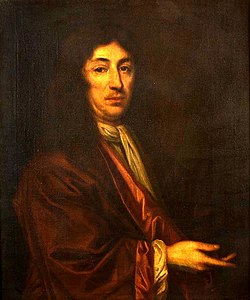
concerned Governor Joseph Dudley,
because actual currency could devalue the colony’s
bills of credit. (At the time its commerce was based
primarily on bartering.) The authorities issued
orders for their arrest and the confiscation of the
ill-gotten currency. Dudley took care of helpers and
hinderers of these orders as well.
 Whosoever shall discover &
Seize any of the Pirates or Treasure concealed,
and deliver them to Justice, shall be Rewarded
for their Pains. Whosoever shall discover &
Seize any of the Pirates or Treasure concealed,
and deliver them to Justice, shall be Rewarded
for their Pains.
And any who
conceal or have in their custody any of the said
Treasure, & shall not disclose and make
known the Quantity & Species, & render
the same unto the Commissioners appointed for
that purpose, within the space of Twenty Days
next after the Publication hereof at Boston,
shall be alike proceeded against. (Beal,
139)
Before long, twenty-five
out of forty-three pirates were captured and seventy
ounces of gold and seventy of silver were turned in.
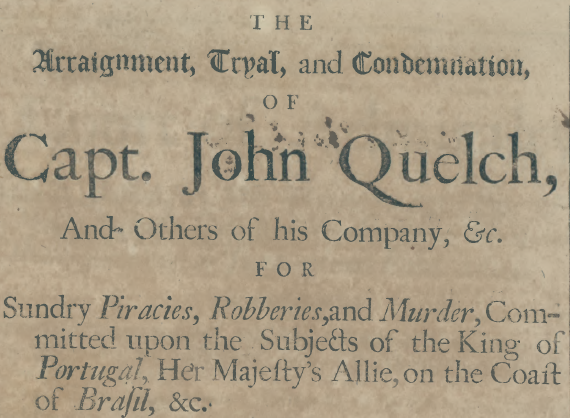
Quelch and others were arraigned and tried on
charges of “Piracies, Robberies, and Murder” in June
according to “the Statute made in the Eleventh and
Twelfth Year of the late King WILLIAM . . . An
Act for the more effectual Suppression of Piracy.”
(Arraignment, 1)
The record of the proceedings included specific
dates and places of their attacks, as well as what
plunder they took and its value. John Clifford,
Mutatis Mutandis, Matthew Pimer, and James Parrot
pled guilty, before Clifford, Pimer, and Parrot were
“received into the Queen’s Mercy, and . . . declared
Witnesses in behalf of the Queen, against John
Quelch and Company . . . .” (Arraignment,
4)
Quelch pled not guilty and asked for time to prepare
for the trial with the assistance of an attorney.
The court granted this request, assigning James
Meinzies to “assist you, and offer any Matter of Law
in your behalf upon your Tryal”, and gave them until
“Friday Morning next, at Nine of the Clock” (16
June) to do so. (Arraignment, 4) Meinzies
would also aid twenty other accused pirates: James
Austin, Dennis Carter, John Carter, John Dorothy,
Charles James, William Jones, Charles King, Francis
King, John King, John Lambert, Richard Lawrence,
John Miller, Benjamin Perkins, Erasmus Peterson,
John Pitman, Nicholas Richardson, Peter Roach,
Christopher Scudamore, John Templeton, and William
Wilde.
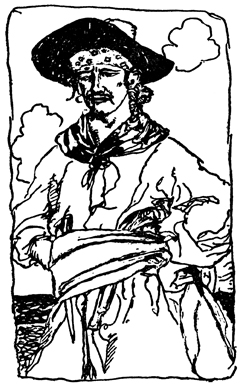
One the sixteenth, Queen’s Advocate Paul Dudley
outlined why the court was assembled.
 A
Pyrate was . . . justly called by the Romans, Hostis
Humani Generis: And the Civil Law saith of
them, that neither Faith nor Oath is to be kept
with them; and therefore if a Man that is a
Prisoner to Pirates, for the sake of his
Liberty, promise a Ransom, he is under no
Obligation to make good his Promise; for Pirates
are not Entituled to Law, not so much as the Law
of Arms; for which Reason ’tis said, if Piracy
be commited upon the Ocean, and the Pirates in
the Attempt happen to be overcome, the Captors
are not obliged to bring them to any Port, but
may exposs them immediately to Punishment, by
Hanging them at the Main-Yard: A sign of its
being of a very different and worse Nature than
any Crime committed upon the Land; for Robbers
and Murderers, and even Traytors themselves,
mayn’t be put to Death without passing a formal
Tryal: And if the fate of the Prisoner at the
Bar, with his Company, had allowed them to have
been overcome in their Piracies, &c. and
immediately hung up before the Sun, it had been
very just upon them. But being then suffered to
live, and now brought unto a Court of Justice,
they are to be used, treated, and tryed as the
Laws of England, and our own Country do
direct. (Arraignment, 5) A
Pyrate was . . . justly called by the Romans, Hostis
Humani Generis: And the Civil Law saith of
them, that neither Faith nor Oath is to be kept
with them; and therefore if a Man that is a
Prisoner to Pirates, for the sake of his
Liberty, promise a Ransom, he is under no
Obligation to make good his Promise; for Pirates
are not Entituled to Law, not so much as the Law
of Arms; for which Reason ’tis said, if Piracy
be commited upon the Ocean, and the Pirates in
the Attempt happen to be overcome, the Captors
are not obliged to bring them to any Port, but
may exposs them immediately to Punishment, by
Hanging them at the Main-Yard: A sign of its
being of a very different and worse Nature than
any Crime committed upon the Land; for Robbers
and Murderers, and even Traytors themselves,
mayn’t be put to Death without passing a formal
Tryal: And if the fate of the Prisoner at the
Bar, with his Company, had allowed them to have
been overcome in their Piracies, &c. and
immediately hung up before the Sun, it had been
very just upon them. But being then suffered to
live, and now brought unto a Court of Justice,
they are to be used, treated, and tryed as the
Laws of England, and our own Country do
direct. (Arraignment, 5)
At this juncture, Dudley
cited Henry VIII’s 1536 Offences at Sea Act, after
which he mentioned that William Kidd had been the
last pirate tried under this statute, having been
transported to London to be tried in a court of law
in England. Then Dudley explained the reasoning
behind King William’s act before returning to the
current trial of Quelch.
It is by
Virtue of this Act of Parliament, and a
Commission pursuant thereto, that your
Excellency and this Honourable Court are now
Sitting in Judgment upon the Prisoner at the
Bar, and his vile Accomplices; and though it may
be thought by some a pretty severe thing, to put
an English-man to Death without a Jury, yet it
must be remembred, that the Wisdom and Justice
of our Nation, for very sufficient and excellent
Reasons, have so ordered it in the Case of
Piracy; a Crime, which . . . scarce deserved any
Law at all[.] (Arraignment, 6)
Then came the
all-important definition of piracy.
The
English Word Pirate, is derived from a Word that
signifies Roving, for Pirates, like Beasts of
Prey, are Seeking and Hunting upon the Ocean for
the Estates, and sometimes the Lives of the
Innocent Merchant and Mariner: His Character and
Description is thus: A Pirate is one who to
enrich himself, either by Surprize or open
Force, sets upon Merchants and others trading by
Sea, to spoil them of their Goods or Treasure,
and oftentimes sinking their Vessels, and
bereaving them of their Lives: And ’tis no
wonder if Piracy be reckon’d a much greater and
more pirnicious Crime, than Robbery upon the
Land, because the Consideration of the General
Navigation and Commerce of Nations, is far
beyond any Man’s particular Property: Besides,
whereas Robbery upon the Land is most commonly
from particular Persons; Piracy is from many,
and oftner attended with the Death of others[.]
(Arraignment, 6)
 During the trial, the
attorney providing legal assistance to the pirates
raised some legal objections. One involved testimony
that gold dust
could not be identified as coming from a specific
place and an expert witness backed up this claim.
While the presiding judge agreed this was true, the
“Coin’d Gold shewn in Court . . . appear plainly to
be Portuguise,” and were permitted to be
admitted into evidence. (Arraignment, 13) During the trial, the
attorney providing legal assistance to the pirates
raised some legal objections. One involved testimony
that gold dust
could not be identified as coming from a specific
place and an expert witness backed up this claim.
While the presiding judge agreed this was true, the
“Coin’d Gold shewn in Court . . . appear plainly to
be Portuguise,” and were permitted to be
admitted into evidence. (Arraignment, 13)
When Meinzies pointed out that witnesses didn’t
always agree on places where prey was captured and
how many were on those ships at the time of
boarding, the judge called these differences “very
immaterial.” (Arraignment, 13)
Another objection concerned the charge against
Quelch for murdering a Portuguese master, even
though another man was identified as having done
that deed. To back up this point, Meinzies cited “Molloy
in his Chapter of Piracy.” In rebuttal, one of
the prosecutors pointed out that
the same
book says, That if the Common Law have
Jurisdiction of the cause, all that are present,
and assisting at such a Murder are principals.
Now the Statute 28. Henry VIII. makes
all Piracies, Robberies and Murders upon the
high Sea, Tryable according to the Rules of the
Common Law, as if they had been committed upon
the Land. (Arraignment, 13)
Therefore, even if Quelch
was not the killer, he was just as guilty because he
had been present when the crime was committed.
A more complicated, yet stronger, objection,
involved the fact “That the proceedings of this
Court, in Examining, Trying and Condemning
Pirates, shall be according to the Civil Law, and
the Methods and Rules of the Admiralty.” (Arraignment,
13)
Civil Law prohibited an accomplice from testifying
as “a Witness, being equally guilty with those he
accuses.” (Arraignment, 13) Meinzies cited
Sir Robert Wiseman’s The Law of Laws and Sir
Edward Coke’s Institutes of the Lawes of England
to support this.
At this point in time, the pirates who had turned
Queen’s Evidence had yet to be pardoned. (Therefore,
they were not impartial witnesses.) The Queen’s
Advocate pointed out that medieval law permitted
accomplice testimony under specific conditions,
calling such witnesses “approvers.” (What he did not
disclose was that doing so was considered mostly
obsolete in 1704, and that the guidelines under
which these particular accomplices would be
permitted to testify had not been met.) He also
pointed out that
in many
Cases, there happens to be no other way to bring
Criminals to their just Punishment, but by
singling out some of their Company, that may be
the least guilty, and make use of them to
convict the rest. (Arraignment, 14)
As for their not having
been officially pardoned yet, he added,
It has
never been thought convenient to give Approvers
their Pardon, until they have actually convicted
their accomplices, lest after their having their
Pardon they may refuse it; altho’ after they
have convicted those they approve, their Pardon
is ex Debito Justitiæ. This is the Opinion of my
Lord Coke, in his Pleas of the Crown,
and so has the practice been since. (Arraignment,
14).
It was clear that the
Court was going to prosecute the pirates and more
than likely find against them, but Meinzies was
determined to do what he could for his clients. He
tried one additional objection that spoke to an
ambiguity in English law. It involved the
contradiction between the statutes of Henry VIII and
William III. English trials were conducted under the
former, which allowed pirates “the benefit of a
Jury,” whereas William’s statute, which allowed for
pirate trials to be conducted in a vice-admiralty
court instead of England, also stipulated that no
jury would hear these cases.
Council to the Queen Thomas Newton kept mum on this
point, but Queen’s Advocate Dudley chose to evade
the issue.
As to the
Method of the Court of Admiralty, ’Tis now about
an Hundred and Three score Years since the
Statute of Henry VIII. was made; a term
long enough to make a Method of any Court, for
ever since that time with the Court of Admiralty
proceeded in cases of Piracy, according to the
Rules of the Common Law; and then as to that
other part of the New Statute, relating to
Piracy, That says, this Court is to proceed
according to the Civil Law. With submission, We
understand it to be the summary way of
proceeding by the Commissioners, and depriving
the Prisoner of a Jury; for ’tis most certain
that the late Statute against Piracy, doth
strengthen and establish the Statute of Henry
the VIII. And it would be very odd to suppose
that the first Act of Parliament in these cases
had rejected and condem’d, the method of the
civil Law in the trial of Pirates, &c. The
second Act of Parliament should be reconcil’d to
that Method, to restore and set it up in the
Plantations, especially when the Title of the
New Act, is an Act, for the more effectual
Suppression of Piracy, &c. (Arraignment,
14)
As Clifford Beal explains
in Quelch’s Gold, Newton
must have
known . . . that Meinzies was correct in his
summation. More disappointingly, Meinzies did
not press his objections further. He had done
only the bare minimum to raise the points on
behalf of his client; it would have been
detrimental in the extreme to his future career
to explode the case against Quelch and embarrass
the entire provincial government. (Beal,
159)
Six days after the trial
began, verdicts were announced. John Templeton was
found not guilty because of his age. William Whiting
was also cleared of the charges against him. The
remaining twenty-three pirates were deemed guilty of
the charges against them. On 30 June 1704, Quelch,
Lambert, Scudamore, Miller, Peterson, and Roach were
hanged. The other pirates spent the next year in
gaol before being pardoned.
Judge pronouncing sentence by
Pushkin and The Pirate's End by George Albert
Williams
(Sources: Shutterstock.com and
Dover's Pirates)
King William’s Act for the more effectual
Suppressions of Piracy was valid for seven
years.9
While in effect, this statute defined piracy as a
robbery committed upon the sea. What was unfortunate
was that it also included an expiration date. Once
1706 came and went, pirates had to be tried
according to Henry VIII’s 1536 statute, which
equated piracy with treason.
Not until 1717 would Parliament enact another law
that firmly identified piracy with robbery, making
it a crime of property. This statute, known as 4
George 1 c.11 or The Transportation Act, said this
about pirates:
all and
every person and persons who have committed or
shall commit any offence or offences, for which
they ought to be adjudged, deemed and taken to
be pirates, felons or robbers, by an act made in
the parliament holden in the eleventh and
twelfth years of the reign of his late majesty
King William the Third, intituled, An act for
the more effectual suppression of piracy, may be
tried and judged for every such offence in such
manner and form
as outlined in Henry
VIII’s 1536 statute. (Pickering, 475) Although that
reference included the taint of treason, its
inclusion here affirmed that the pirates would
suffer death rather than transport. This law also
dealt with those who could be considered accomplices
of pirates.
IV. And
whereas there are several persons who have secret
acquaintance with felons, and who make it their
business to help persons to their stolen goods,
and by that means gain money from them, which is
divided between them and the felons, whereby they
greatly encourage such offenders: be it
enacted . . . That where-ever any person taketh
money or reward, directly or indirectly, under
pretence or upon account of helping any person
or persons to any stolen goods or chattels,
every such person . . . shall be guilty of
felony, and suffer the pains and penalties of
felony, according to the nature of the felony
committed . . . as if such offender had himself
stolen such goods and chattels . . . . (Pickering,
473-474)
This guaranteed that
those who colluded with pirates and shared in the
profits would be just as guilty as the pirates and
therefore, be subject to the same penalties as those
accused of piracy. This statute also expanded the
definition of pirate: a pirate wasn’t just a thief
who conducted his business at sea; now he was also
anyone who assisted pirates. Additional laws against
piracy were enacted in 1721, 1739, and 1744, further
cementing the definition as a property crime instead
of a crime against the king.
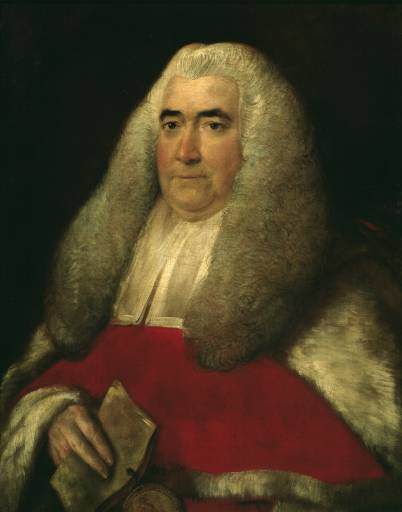 Noted
jurist William Blackstone also
clarified the definition of piracy, as well as the
laws and punishments pertaining to this crime, in
his Commentaries on the Laws of England, which was
published between 1765 and 1769. Noted
jurist William Blackstone also
clarified the definition of piracy, as well as the
laws and punishments pertaining to this crime, in
his Commentaries on the Laws of England, which was
published between 1765 and 1769.
[T]he
crime of piracy, or robbery and depredation upon
the high seas, is an offense against the
universal law of society; a pirate being,
according to Sir Edward Coke, hostis humani
generis [enemy to mankind]. As therefore he has
renounced all the benefits of society and
government, and has reduced himself afresh to
the savage state of nature, by declaring war
against all mankind, all mankind must declare
war against him: so that every community has a
right, by the rule of self-defense, to inflict
that punishment upon him . . . .
[A]ny commander,
or other seafaring person, betraying his trust,
and running away with any ship, boat, ordnance,
ammunition, or goods; or yielding them up
voluntarily to a pirate; or conspiring to do
these acts; or any person confusing the
commander of a vessel, to hinder him from
fighting in defense of his ship, or to cause a
revolt on board; shall, for each of these
offenses, be adjudged a pirate, felon, and
robber, and shall suffer death, whether he be
principal or accessory. By the statute 8 Geo. I.
c. 24. the trading with known pirates, or
furnishing them with stores or ammunition, or
fitting out any vessel for that purpose, or in
any wise consulting, combining, confederating,
or corresponding with them; or the forcibly
boarding any merchant vessel, though without
seizing or carrying her off, and destroying or
throwing any of the goods overboard; shall be
deemed piracy: and all accessories to piracy,
are declared to be principal pirates, and felons
without benefit of clergy. (Blackstone)
To be continued . . .
Notes:
8. Although Quelch’s trial was
the first held in Colonial America per William’s
statute (permitting vice-admiralty courts to try
pirates), his was not the first pirate trial in the
colonies. Hanna mentions one that occurred in
Maryland in 1659; the sixteen accused were tried by
a grand jury. Found guilty of piracy, they were
evicted from the colony and told never to return.
9. Aside from identifying a
pirate as a thief, what set William’s law apart from
earlier statutes was that it also highlighted the
difference between a pirate and privateer. The
latter had a valid letter of marque, which meant it
was still viable and in effect at the time of the
plundering. If England was no longer at war or the
commission had expired, the privateers were now
considered pirates.
Resources (The list is so
extensive that I have placed it on a separate page.)
Copyright ©2025 Cindy Vallar

Click to contact me
Background image compliments
of Anke's Graphics |