Pirates and Privateers Pirates and Privateers
The History of Maritime
Piracy
Cindy Vallar, Editor
& Reviewer
P.O. Box 425,
Keller, TX 76244-0425

Universal Jurisdiction
Law & Order: Pirate Edition (part 8)
by Cindy Vallar
Even though universal jurisdiction
gives a country the right to prosecute
pirates, not all countries are willing to do
so. It’s easier to capture them than it is
to prosecute them. Some laws require that
they be caught in the act, but oftentimes,
the act of piracy has already occurred or
failed by the time the authorities holding
the power to arrest them come upon the
scene.
Another difficulty is that not all states’
laws treat pirates as pirates; instead, they
are seen as “boat people” or illegal
immigrants and if they set foot in some
countries, including the United Kingdom, the
pirates can request asylum because if they
returned to their homeland, they can be
beheaded or have a limb amputated.
Just
as in the past when British officials
discovered it was too expensive to transport
captured pirates to England for trial, the
same is true today, and it’s not just the
cost of the physical means of
transportation. Those costs include securing
witnesses, holding the trials, housing and
feeding, etc. Not all countries are willing
to foot those bills. Some countries,
including the United States and the
Netherlands, do. Shortly before the Maersk Alabama
incident, the Royal Netherlands Navy
captured five pirates. The accused were
taken to the Netherlands for trial, but
doing so long term is not feasible.
Although
each nation must enact its own laws against
piracy so that those accused of such crimes
can be tried within the boundaries of that
country, two conventions define piracy and
outline the rules that allow for the
suppression of this crime under universal
jurisdiction. The first is The United Nations Convention
on the Law of the Sea (UNCLOS) and the
second is the Convention for the
Suppression of Unlawful Acts Against the
Safety of Maritime Navigation (often
referred to as the SUA Convention).10
Here again, the definition of piracy comes
into play. UNCLOS defines it in Article 101
as follows:
Piracy consists of any of the
following acts:
(a) any illegal acts of
violence or detention, or any act of
depredation, committed for private
ends by the crew or the passengers of
a private ship or a private aircraft,
and directed:
(i) on the high seas,
against another ship or aircraft, or
against persons or property on board
such ship or aircraft;
(ii) against a ship,
aircraft, persons or property in a
place outside the jurisdiction of
any State;
(b) any act of voluntary
participation in the operation of a
ship or of an aircraft with knowledge
of facts making it a pirate ship or
aircraft;
(c)
any act of inciting or of
intentionally facilitating an act
described in subparagraph (a) or (b).
(Rubin,
431)
The
SUA Convention is a broader document and
doesn’t specifically mention piracy,
although it can be applied to this illegal
act.
Article
3
1. Any person commits an
offense if that person unlawfully and
intentionally:
(a) seizes or exercises
control over a ship by force or
threat thereof or any other form of
intimidation; or
(b) performs an act of
violence against a person on board a
ship if that act is likely to
endanger the safe navigation of that
ship; or
(c) destroys a ship or
causes damage to a ship or to its
cargo which is likely to endanger
the safe navigation of that ship; or
(d) places or causes to be
placed on a ship, by any means
whatsoever, a device or substance
which is likely to destroy that
ship, or cause damage to that ship
or its cargo which endangers or is
likely to endanger the safe
navigation of that ship; or
(e) destroys or seriously
damages maritime navigational
facilities or seriously interferes
with their operation, if any such
act is likely to endanger the safe
navigation of a ship; or
(f) communicates
information which he knows to be
false, thereby endangering the safe
navigation of a ship; or
(g) injures or kills any
person, in connection with the
commission or the attempted
commission of any of the offences
set forth in subparagraphs (a) to
(f).
2. Any person also commits
an offence if that person:
(a) attempts to commit any
of the offences set forth in
paragraph 1; or
(b) abets the commission
of any of the offences set forth in
paragraph 1 perpetrated by any
person or is otherwise an accomplice
of a person who commits such an
offence; or
(c) threatens, with or
without a condition, as is provided
for under national law, aimed at
compelling a physical or juridical
person to do or refrain from doing
any act, to commit any of the
offences set forth in paragraph I,
subparagraphs (b), (c) and (e), if
that threat is likely to endanger
the safe navigation of the ship in
question. (Convention)
What is noteworthy about the SUA Convention
are its instructions on what to do with
prisoners upon capture. In theory, such
pirates can be extradited to third-party
countries that have agreed to prosecute
pirates because of agreements with the
nations that technically should do the
prosecuting. When it comes to Somali piracy,
however, the SUA Convention doesn’t work
because acts of piracy must take place on
the high seas, rather than in territorial
waters, and warships are usually the vessels
that capture the pirates. This often means
that the flag nation of the warship is
responsible for prosecution.
One
way countries have dealt with the desire to
prosecute without incurring all the involved
costs or without allowing suspected pirates
to claim asylum, is to “rent out” another
country’s justice system. Such an agreement
was reached between the United Kingdom and Kenya.
In essence, these agreements
amounted to extradition treaties where
there existed no legal reason why the
capturing states could not prosecute
offenders in their own court systems. (Bahadur,
158)
This
proved to be a temporary arrangement because
Kenya’s prison system is overcrowded and
difficulties exist in managing these
institutions, not to mention a prosecution
backlog in their court system. Nor does
Kenya wish to become a dumping ground for
other countries’ accused pirates.
For a time, Kenyan courts did prosecute
pirates. The first trial occurred in 2006,
in Mombasa and involved the defendants
accused of hijacking Safina Al Bisaraat.
Earlier that year, after ten pirates
captured this trading dhow, they used it as
a mother ship from which they could attack
other prey. Their first two targets escaped,
but one ship’s bridge was damaged when the
pirates fired a rocket-propelled grenade.
Attacking MV Delta Ranger resulted
in a three-hour standoff between the pirates
and USS Winston Churchill. The
former either tossed their weapons into the
sea or hid them on the bulk carrier before
navy personnel came aboard Delta Ranger
and arrested the pirates.
When Jay Bahadur, a
Canadian author and investigator,
interviewed the accused pirates in Kenya’s
Maivasha prison, Hassan claimed that he and
the others were fishermen.
[W]e were fishing when we
were captured. But the Americans
destroyed all the evidence: our boats
and our nets. (Bahadur, 160)
According
to Hassan, they didn’t even have legal
representation, although a lawyer did defend
them at their trial and even filed an appeal
on their behalf.11
Hassan also insisted “no evidence was
brought against us. And no witnesses,
either.” (Bahadur, 160) As far as he was
concerned, he and his cohorts “were not
proved guilty beyond a reasonable doubt.”
(Bahadur, 160) According to the BBC, the
opposite was true. Several of the crew from
the dhow bore witness against the pirates,
including saying they had been tortured by
them.
Hassan
believed he should have been tried in
Somalia where he would have received a fair
trial. It didn’t matter that the conditions
in that jail were far worse than in his
present place of incarceration, assuming a
Somali court sent him to prison at all.
Each
pirate had to serve seven years’
imprisonment. Three years of that time had
passed when Hassan spoke to Bahadur. He and
his fellow pirates already had no plans to
ever return to their homeland.
What we want is to be granted
refugee status, or residency permits.
Whatever we need to stay in Kenya. . . .
[W]e’ll be businessmen. All we need is a
little capital to start off with.
(Bahadur, 161)
Prosecuting
pirates in Kenya was not without issues. Its
parliament didn’t
incorporate UNCLOS into their laws until
February 2009, with the passage of the Merchant Shipping Act.
Part XVI addressed maritime security and
paragraph 369 defined piracy as
(a) any act of violence or
detention, or any act of depredation,
committed for private ends by the crew
or the passengers of a private ship or a
private aircraft, and directed –
(i) against another ship or
aircraft, or against persons or
property on board such ship or
aircraft; or
(ii)
against a ship, aircraft, persons or
property in a place outside the
jurisdiction of any State;
(b)
any voluntary act of participation in
the operation of a ship or of an
aircraft with knowledge of facts making
it a pirate ship or aircraft; or
(c)
any act of inciting or of intentionally
facilitating an act described in
paragraph (a) or (b);
“pirate
ship or aircraft” means a ship or
aircraft under the dominant control of
persons who –
(a) intend to use such ship
or aircraft for piracy; or
(b)
have used such ship or aircraft for
piracy, so long as it remains under
the control of those persons;
“private
ship” and “private aircraft” mean a ship
or aircraft that is not owned by the
Government or held by a person on behalf
of, or for the benefit of, the
Government; and
“UNCLOS”
means the United Nations Convention on
the Law of the Sea, 1982.
(2)
Piracy committed by a warship,
government ship or government aircraft
whose crew has mutinied and taken
control of the ship or aircraft is
assimilated to piracy committed by a
private ship or aircraft.
(3)
This Part applies to aircraft only when
they are on the high seas, that is to
say, in those parts of the sea to which
Part VII of UNCLOS is applicable, in
accordance with Article 86 of UNCLOS.
(Merchant)
The
Act further stipulated the punishment for
piracy in paragraph 371.
Any person who –
(a)
commits any act of piracy;
(b)
in territorial waters, commits any act
of armed robbery against ships,
shall
be liable, upon conviction, to
imprisonment for life. (Merchant)
One
additional insertion in this document was
that Kenya’s parliament “assumed
jurisdiction over piracy offenses” no matter
where the ship was at the time, be it in
international or territorial waters, and no
matter the suspected pirate’s nationality.
Those
arrested as pirates end up near Mombasa in
Shimo La Tewa (“Shimo” for short), which Kenyans.co.ke
describes as one of the country’s “most
dangerous prisons” and is often “referred to
as the camp of death.”12
In
2010, with the assistance of the United Nations’ Office on
Drugs and Crime (UNODC), Kenya opened
a new courtroom at Shimo “to meet increased
judicial needs relating to piracy.” (UNODC)
This facility allows for “increased trial
capacity and . . . a secure, modern
environment suitable for trying piracy
cases.” The prison has also been
refurbished, and UNODC supports and trains
“prosecutors and police” so Kenya can
prosecute those awaiting trial for piracy in
a timely and legal fashion. Rehabilitation
has also become a cornerstone of this
prison: “[I]f prisoners do not understand
that what they have done is wrong, and if
they are not equipped with alternate tools
for when they are released, we cannot
counter recidivism.” (Shimo)
Despite
the new facilities, Kenya closed its doors
to prosecuting pirates in September 2010,
when their agreements with the European
Union, as well as the United States, the
United Kingdom, Canada, and China expired.
Reasons given for the nonrenewal were a lack
of financial support, as well as judicial
and technical expertise, and security risks,
even though the United States and UNODC
denied this. Yet in January 2025, Kenya
pledged to renew its prosecution of
suspected pirates arrested by the European Union Naval Force
(EUNAVFOR), which cannot legally detain or
prosecute suspects who have not been
formally charged with crimes. According to
Acting Director General Isaiah Nakoru of
Kenya’s Department for Shipping and Maritime
Affairs,
We have to work together to
ensure that we achieve the aspiration
for ensuring sustainability and
security, and all activities that
threaten the livelihoods of people and
movements of people have to be addressed
in partnership with all those who have a
stake. (Africa)
The
United States and other nations also
prosecute pirates. In 2010, a band of seven
Somali pirates attacked a cargo ship
transiting the Gulf of Aden. Except she
wasn’t a cargo ship; she was USS Ashland. The
warship fired back, killing one pirate and
destroying their boat. Mohamed Farah and
Abdi Abshir Osman each received a sentence
of life plus ten years, while Mohamed Abdi
Jama and Abdicasiis Cabaase’s convictions
resulted in life plus thirty years, after
being convicted in February 2013. The
remaining pirates received lesser sentences:
Jama Idle Ibrahim fifteen years and Mohamed
Ali Said thirty-three years.
Germany
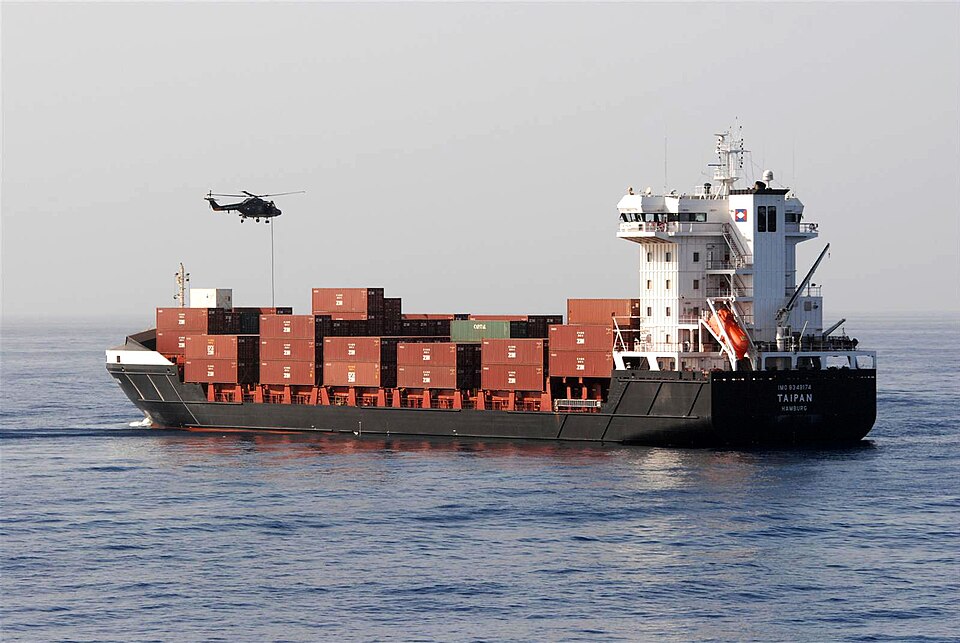
prosecuted ten pirates in 2010, following an
attack on MS Taipan. The crew of the
German ship secured themselves in the
container vessel’s security room and shut
down the engines, making it impossible for
the pirates to take the ship back to
Somalia. Members of the Royal Netherlands
Navy captured the pirates and eventually
turned them over to German officials. The
trial, held in 2012, was the first time the
country had prosecuted pirates in about 400
years, and became one of the longest in
postwar Germany because of language
differences and resolving how old each
pirate was. After 105 days, a Hamburg court
sentenced seven of the pirates to between
two and seven years in jail; three were
released because they were minors, who
attended school in Germany. During the
trial, defense attorney Rainer Pohlen said,
“We are presuming here to apply law
according to our German ideas on people
whose living situations we cannot even begin
to imagine.” (Court) The chief judge, Bernd
Steinmetz, told the courtroom that the court
felt “certain that all 10 defendants should
be convicted,” in part because each one
expected to receive a share of the ransom
had they succeeded in their venture. In
response to the court’s ruling, Ralf Nagel
of Verband Deutscher Reeder (German
Shipowners’ Association), said, “Piracy is a
crime, and criminals belong in court.”
(Court)13
Also
in 2010, Choizil left Dar es
Salaam, Tanzania on her way to South Africa
in late October. The skipper of the South
African yacht was Peter Eldridge, and two of
his crew were Deborah Calitz and Bruno
Pelizzari. When Calitz first spotted the
pirates’ speed boats, she mistook them for
“three whales crashing their tails.”
(Kidnapped) Instead, they were pirates who
boarded the boat.
The leader aimed a bazooka at
us. Five other guys came on board. They
looked like they were taking some sort
of drug. (Kidnapped)
Initially,
Eldridge, Calitz, and Pelizzari were taken
ashore and separated. Calitz shared the
following:
They said they were going to
slit my throat . . . so I started
talking about light and love. I told my
interrogator that we all had a choice in
life. We could either choose love or
darkness. He didn’t know what to do with
me . . . [and] finally gave up and went
and sat somewhere else. (Kidnapped)
Pelizzari
endured beatings and was forced to stand on
top of a roof in the hot sun. He had to hold
his hands on his head.
One pointed a rifle at me and
fired. You could actually hear the empty
chamber click. There were no bullets. He
did this several times. (Kidnapped)
When
they rejoined Eldridge, they discovered that
he had bargained for their survival in
exchange for his life. “He was ready to
die.” Eldridge returned to the yacht with
five of the twenty pirates. Although the
pair did hear gunfire and assumed their
captain had been killed or was wounded, he
actually was rescued by the antipiracy task
force from the European Union (EUNAVFOR) and
returned to South Africa. Calitz and
Pelizzari weren’t as lucky. They remained
kidnapped victims for twenty months and
endured psychological torture, before they
were blindfolded and moved
into the boot of a smaller car. We
thought they were going to kill us and
bury us in the desert. The car drove for
about 10m. We were then taken out and
put into another car. (Kidnapped)
Despite
these fears, the couple was on their home.
When
the Dutch navy rescued Eldridge, they also
captured five pirates. South Africa refused
to prosecute the suspects, so the
Netherlands opted to do so. Eldridge
“positively identified the accused men as
being among the armed pirates who had
hijacked” his yacht. (Stuijt) Testifying did
not lessen his trauma. “It is probably
something I will never get over.” (Stuijt)
The
trial took place in the Court of First
Instance of Rotterdam, and while pronouncing
sentence, Judge Jacco Janssen said, “During
the attack . . . extreme violence was used.
The crew thought their last hour had
arrived.” (Somali) The pirates received
sentences of four-and-a-half to seven years’
imprisonment. On appeal, one was resentenced
to five years with credit for time served in
2012.
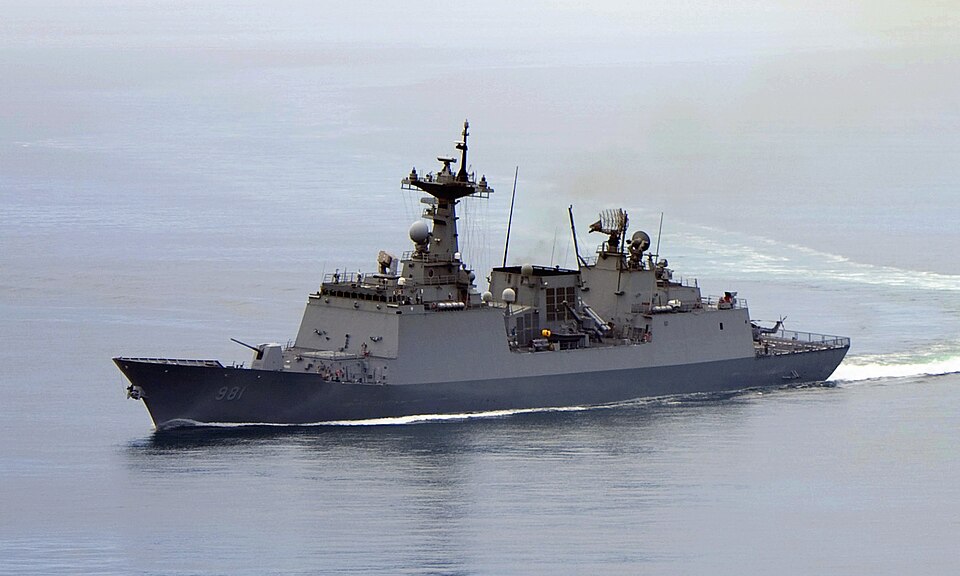
Republic of Korea Navy's Choi
Young pursued Somali pirates after
they attecked MV Samho Jewelry
Source: Wikimedia Commons
eight counts of criminal acts
of piracy including forced taking of the
ship, forced taking of property on the
ship, forced operation of the ship,
demand of ransom for the release of
hostages, firing at soldiers, physical
assault, threat and bodily harm
inflicted upon the crew, use of the crew
as “human shields,” and firing upon the
captain. (Lee)
Additional
charges were also filed. At one point prior
to the court rendering its verdict, the
prosecutor learned that this wasn’t the
first attack by these pirates.
We showed photos of the
pirates who captured the Samho
Jewelry to the Samho Dream
crew, and some of them remembered four
or five pirates, saying they saw them
while they were captured. (Rahn)
 Further
investigation confirmed that “piracy is
conducted through ‘operation groups’ that
hijack ships, ‘investors’ who provide the
pirates with jet boats, arms and food, and
‘negotiators’ in charge of talks with
shipping companies.” (Rahn) According to
prosecutor Jeong Jeom-sik, learning more
about these people proved impossible because
“the chief and vice chief of the pirate
group, who may have known the investors
well, died.” (Rahn) Nor was this a random
attack. The pirates were aware of the ship’s
route prior to the attack and “specifically
targeted [her] after learning that another
ship owned by the same shipping company was
released in November last year after paying
a huge ransom.” (Hyo-sik)15
The
court convicted the pirates and sentences of
thirteen to fifteen years were imposed, with
the exception of the pirate who was
convicted of shooting the ship’s master Seok
Hae-kyun.16 Arai
Mohamed received a life sentence for his
conviction on attempted murder. Although
appeals were filed, the Supreme Court upheld
the verdicts and sentences. One outcome of
the trial was that it “revealed challenges
to the Korean legal system that need to be
addressed to handle the prosecution of
pirates.” (Lee) Further
investigation confirmed that “piracy is
conducted through ‘operation groups’ that
hijack ships, ‘investors’ who provide the
pirates with jet boats, arms and food, and
‘negotiators’ in charge of talks with
shipping companies.” (Rahn) According to
prosecutor Jeong Jeom-sik, learning more
about these people proved impossible because
“the chief and vice chief of the pirate
group, who may have known the investors
well, died.” (Rahn) Nor was this a random
attack. The pirates were aware of the ship’s
route prior to the attack and “specifically
targeted [her] after learning that another
ship owned by the same shipping company was
released in November last year after paying
a huge ransom.” (Hyo-sik)15
The
court convicted the pirates and sentences of
thirteen to fifteen years were imposed, with
the exception of the pirate who was
convicted of shooting the ship’s master Seok
Hae-kyun.16 Arai
Mohamed received a life sentence for his
conviction on attempted murder. Although
appeals were filed, the Supreme Court upheld
the verdicts and sentences. One outcome of
the trial was that it “revealed challenges
to the Korean legal system that need to be
addressed to handle the prosecution of
pirates.” (Lee)
One
pirate, Serum Abdullah, hopes to stay in
South Korea after his release. Some of his
fellow pirates said “the detention center is
better than most hotels in Africa.”
(Hyo-sik)
Notes:
10. Although
the United States helped to draft the
United Nations’ UNCLOS and signed the 1994
agreement that amended the 1982
convention, Congress has never ratified
it. The country is one of thirteen members
of the UN that has not formally approved
and confirmed UNCLOS.
11. Piracy is not a
capital offense under Kenyan statutes. If
a defendant doesn’t have or can’t afford a
lawyer, the court is only permitted to
assign someone to defend the accused in
cases where he/she is charged with murder
or violence during the commission of a
robbery. The agreement with the European
Union does stipulate, however, that
accused pirates will have attorneys to
defend them, so pirates tried in Kenyan
courts are assigned attorneys.
12. In 1995, Kenyan
journalist Mutonya Njunguna labeled the
prison as “belonging in a horror film.”
(Bahadur, 152) Inmates’ beds were the
floor. They endured sweltering heat and
unsanitary conditions – not surprising
since the maximum number of inmates was
supposed to be 1,000, but the prison
actually housed 3,500. Despite the changes
and refurbishments that Shimo has
undergone because of the housing and
prosecuting of pirates, Mwanza’s
assertions quoted in this article were
published in 2020.
13. The German trial
involved “[f]our judges, four lay judges,
two prosecutors, 10 other court employees,
20 defense attorneys and three Somali
language interpreters – along with
numerous expert witnesses.” Der
Spiegel reporter Beate Lakotta
questioned why the prosecutors wanted the
defendants to be incarcerated for “a total
of 81 years”, since it would neither deter
Somali pirates from attacking ships nor
help the pirates rejoin society.
Especially, given that upon their
releases, they are more likely to stay in
Germany “at public expense” rather than
return to their homeland. (Lakotta)
14. Samho
Jewelry is registered in Malta,
which means that Malta had jurisdiction in
this pirate case.
15. The previous
attack had been on Samho Dream,
which was carrying Iraqi oil to the United
States when it was boarded. The shipping
company negotiated a ransom of $9,000,000
for the release of the twenty-four crew
members. This didn’t sit well with the
Korean public. They perceived that “the
government seemed unprepared, or
unwilling, to react aggressively when
faced with threats.” President Lee Myung
Bak said, “We will not tolerate any
behavior that threatens the lives and
safety of our people in the future,” so
the navy was given the go-ahead to storm
the freighter. (Wagner)
16. Shot in the
stomach, Seok Hae-kyun was conscious at
the hospital where he was to undergo
surgery. “He underwent three to four hours
of surgery and wore a cast as both of his
legs and his left arm were broken.”
(Wounded) He did recover from his
injuries.
To be continued . . .
Resources (The list is so
extensive that I have placed it on a separate page.)
Copyright ©2025 Cindy Vallar

Click to contact me
Background image compliments
of Anke's Graphics |