Pirates and Privateers Pirates and Privateers
The History of Maritime
Piracy
Cindy Vallar, Editor
& Reviewer
P.O. Box 425,
Keller, TX 76244-0425

Pirates &
Religion
by Cindy Vallar
Congress
shall make no law respecting an establishment of
religion, or prohibiting the free exercise
thereof . . . .
The First Amendment of the Constitution guarantees religious freedom for all
people who live in the United States. Inclusion of
this right stems from the fact that the countries
from which our ancestors hailed lacked this freedom.
Each country practiced a state religion and its
citizens were expected to adhere to that faith and
pay that church’s taxes. Initially, most of Europe
was Roman Catholic. During the late fifteenth and
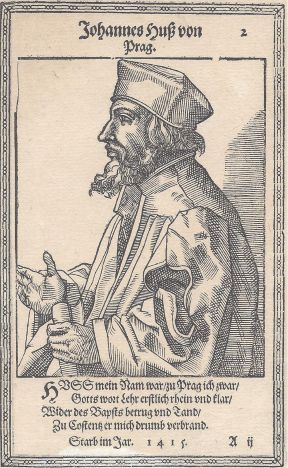
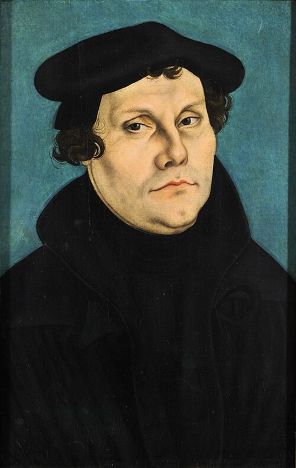
sixteenth centuries, men like Jan Hus and Martin Luther objected to some
Church practices, which led to the Protestant Reformation. Of
course, some citizens preferred to practice faiths
other than the state religion, but they often
encountered persecution because of this.
The intersecting of religion and piracy and/or
privateering took place over many centuries. At
times these men and women championed their faith; at
other times they rejected all parts of the state, of
which religion was one aspect. Pirates of the first
quarter of the eighteenth century fell into this
latter category. They rejected any convention of the
state, including religion, because they saw it as a
way for the state to control and/or oppress the
majority of its citizens. When Samuel Bellamy and his crew
captured Captain Beer’s sloop in 1717, Bellamy
explained:
. . .
there is no arguing with such sniveling Puppies,
who allow Superiors to kick them about Deck at
Pleasure; and pin their Faith upon a Pimp of a
Parson; a Squab, who neither practices nor
believes what he puts upon the chuckle-headed
Fools he preaches to. (Defoe, 587)
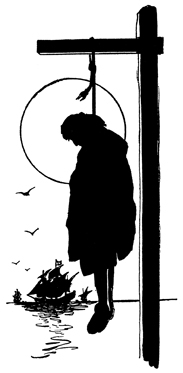
Only when faced with
their own deaths at the hangman’s noose did some of
these rogues return to the fold, oftentimes through
the ministry of clergymen who visited them in jail
with the hope of extracting their confessions and to
offer them redemption for their sins and solace
during the final moments of their lives prior to and
during their executions. Perhaps the best known of
these ministers was the Reverend Cotton Mather, who counseled
men like William Fly, John Phillips, and John Quelch. Another such
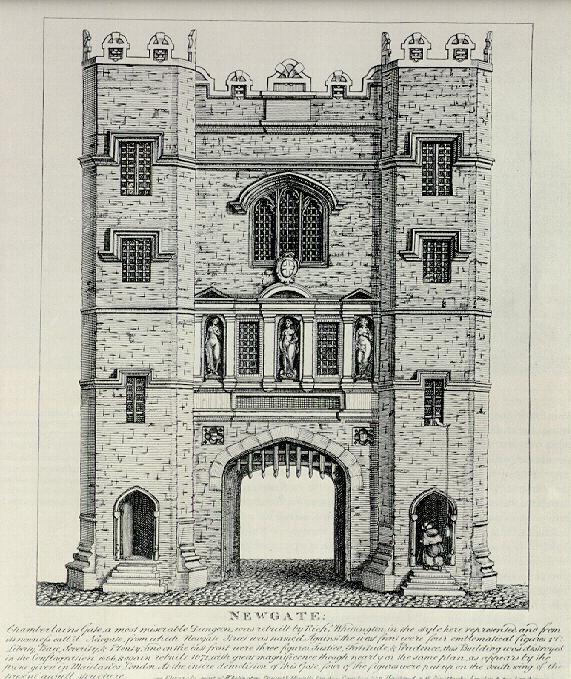
gentleman was the Reverend Paul Lorrain, the Ordinary
(prison chaplain) at Newgate Gaol.
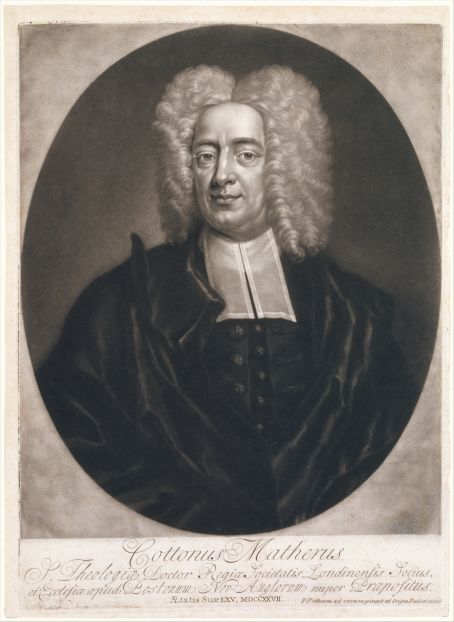  
Cottonus Matheris (Cotton
Mather) engraved by Peter Pelham in 1728
(Source: The Met)
The Pirate's End by George Albert Williams in
1813 (Source: Dover's Pirates)
Old Newgate Prison (Source: Wikimedia Commons)
Christopher Scudamore, the cooper in John Quelch’s
crew, was convicted of piracy in Boston in 1704. He
“requested an extra three days to say his prayers
and study the scriptures. At the gallows, he sang
the first part of the 31st Psalm through by
himself.” (Travers, 48)
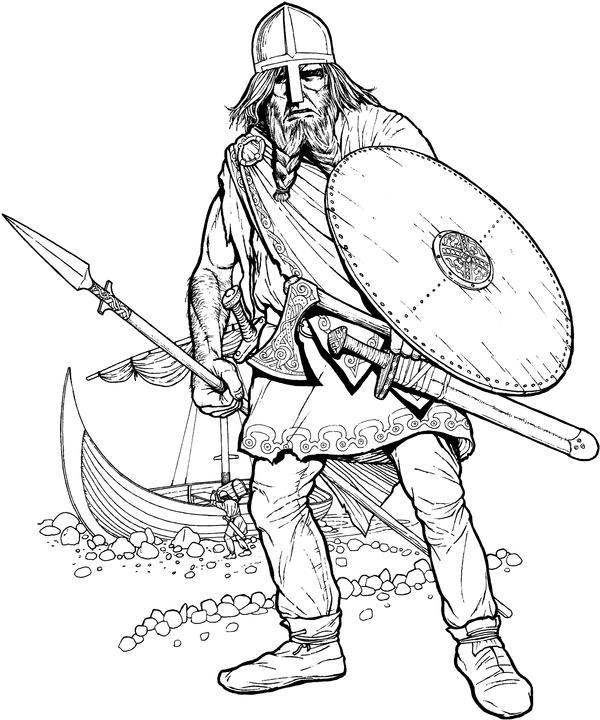
But what of earlier time periods? The Vikings often raided monasteries, but the
primary target was the rich plunder contained within
the walls of these centers, rather than because
their beliefs conflicted with those of the Church.
Symeon of Durham witnessed one such raid.
They came
to the church of Lindisfarne, laid
everything waste with rievous plundering,
trampled the holy places with polluted feet, dug
up the altars and seized all the treasures of
the holy church. They killed some of the
brothers; some they took away with them in
fetters; many they drove out, naked and loaded
with insults; and some they drowned in the sea.
In medieval times,
religion played a crucial role in the Crusades. These holy
wars pitted European Christians against
Muslims of the Ottoman Empire. Both sides employed
corsairs to attack enemy shipping and raid coastal
villages. The Barbary corsairs came from
Algiers, Tunis, Tripoli, and Salé along the northern
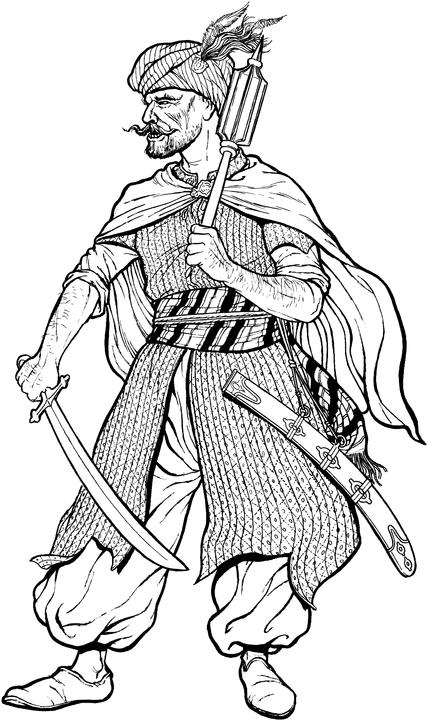
coast of Africa. Whenever Janissaries, the warriors
on Barbary ships, boarded an enemy vessel, the khodja
(purser) “read out verses from the Koran in a
loud voice”. (Earle, 44) The corsairs’ Christian
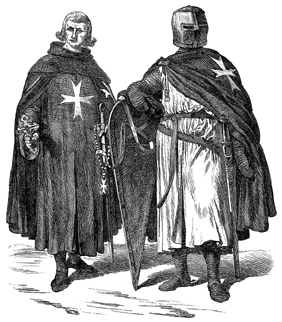
counterparts came from religious orders, most
notably the Knights of St. John of Jerusalem
(eventually known as the Knights of Malta) and the
Knights of St. Stephen. Livorno (also known as
Leghorn) was a haven for Christian corsairs who
sailed under the Duke of Tuscany’s flag. Sometimes
their raids crossed that gray line between
privateering and piracy, and both sides attacked
friendly ships rather than just those of their
enemies. According to documents dated 6 June and 11
June 1607, in the Venetian Calendar of State Papers,
the duke “receives, shelters and caresses the worst
of the English men who are proclaimed pirates by the
King.”
Viking,
Knights of St John of Jerusalem, and Barbary
Corsair
Aside from the religious element of these wars,
trade and politics also played important roles. Both
sides sought not only wealth but also slaves. Jewish merchants
played key roles in brokering sales of the captured
men, women, and cargoes the corsairs on either side
plundered. Redemptionist orders of Catholic priests
assisted in negotiations with the rulers of the
Barbary States to repatriate these captured people
to their homelands. Other captives “turned Turk”
(converted from Christianity to Islam) to escape
slavery and gain wealth and prestige through
plundering. Following the defeat of the Ottoman navy
at the Battle of Lepanto in 1571,
both Christian and Muslim privateers eventually
devolved into pirates. Corsairs of the Knights of
Malta continued to plunder Mediterranean trade until
Napoleon landed on the island
in 1798. The Barbary corsairs continued to plunder
vessels into the first half of the nineteenth
century.
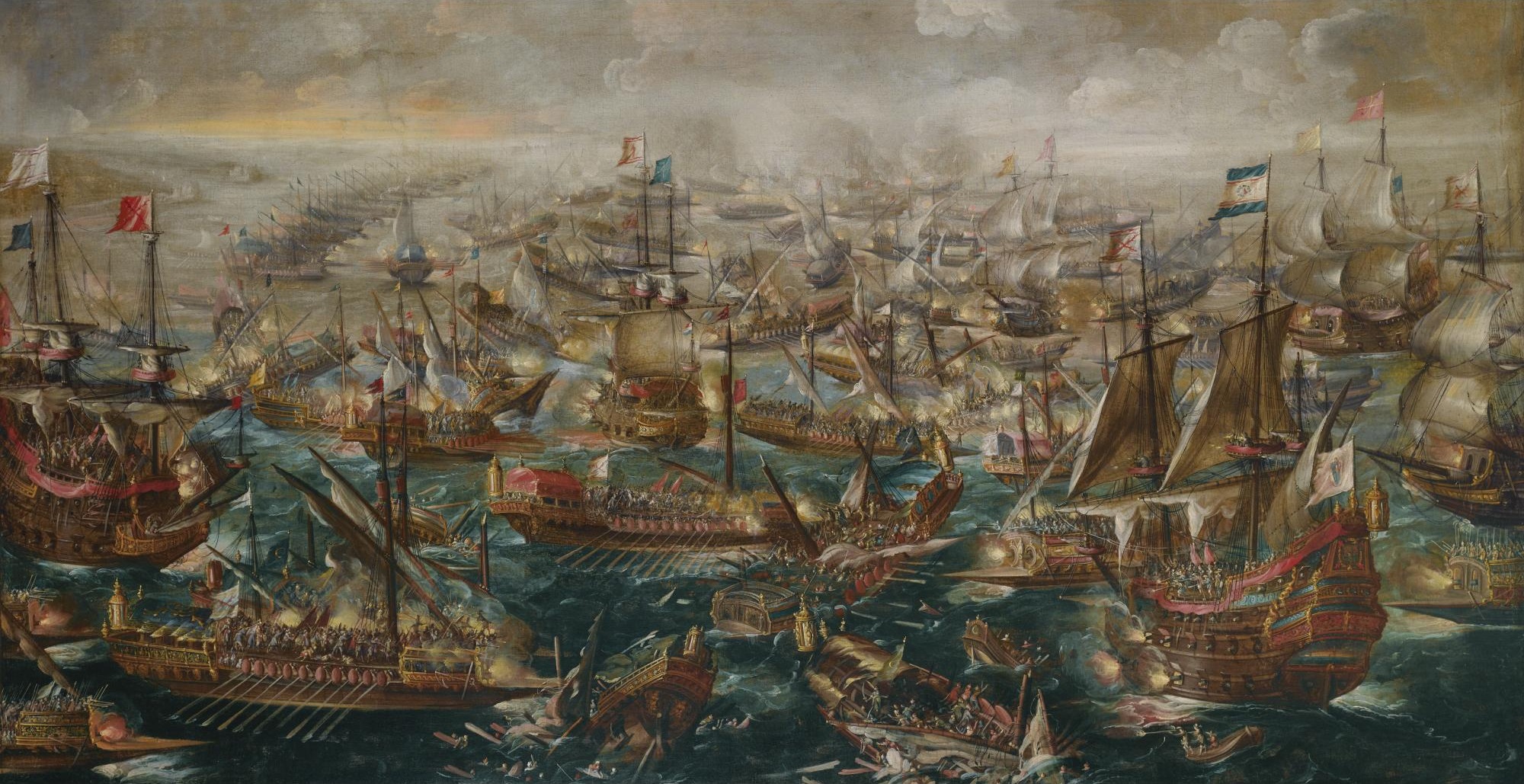
Andries van Eertvelt's 1640 oil
painting of The Battle of Lepanto (1571)
(Source: Wikimedia Commons)
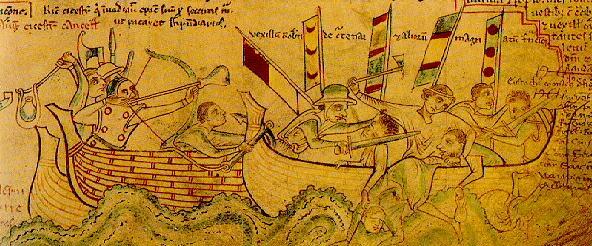
Death of Eustace the Monk
during the Battle of Eustace by Matthew Paris,
1217
(Source: Wikimedia Commons)
Pope Alexander VI divided the
New World between Spain and Portugal in the Treaty
of Tordesillas in 1494. This didn’t sit well with
other European countries, especially after Jean
Fleury (or Florin), a French privateer, captured
three Spanish vessels in 1523 laden with
chests
filled with Aztec gold, sparkling jewelry, and
religious statues; precious jewels, including an
emerald the size of a man’s fist; even a live
jaguar in a cage. In all, the plunder was valued
at more than 800,000 gold ducats – the
equivalent of a staggering 234 million dollars
today. (Konstam, World, 66)
This “find” confirmed
rumors of the riches of the New World, which enticed
the English, Dutch, and French to stake their claims
on lands in the Caribbean and North and South
America. During the sixteenth and seventeenth
centuries, these interlopers sailed as privateers or
pirates, depending on whether the countries for
which they sailed were at war or not with Spain.
Raids on Spanish vessels and holdings in the
Caribbean became particularly prevalent from 1568 to
1603. While the primary goal of these pirates and
privateers remained financial gain with minimal
effort, religious zealotry also played a vital role
in the attacks. English Sea Dogs, Dutch Sea Beggars, and French Huguenots championed
the Protestant faiths against Spain, defender of
Catholicism. One of the best known of the Sea Dogs
was Sir Francis Drake, Queen
Elizabeth I’s “pirate.”
[He] would
have learned that salvation is a matter of
absolute faith in God, and that his actions
should stem from his faith. He would also have
learned to despise the Catholic Church, its
grasping, materialistic ways made visible in the
fine altars of its cathedrals and the rich
vestments of its clergy even as it ignored the
poverty and anguish of the common man. (Dudley,
17)
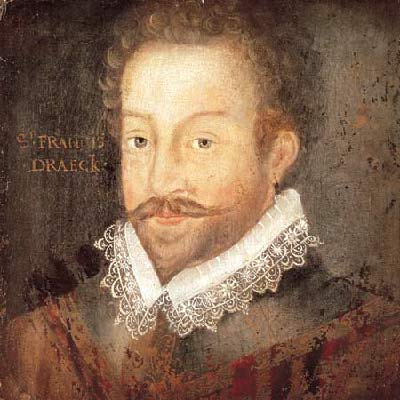 Born around 1540, he
lived in a Protestant England ruled by Henry VIII (1509-1547) and Edward VI (1547-1553). When Mary I ascended the throne on
the death of her brother, Catholicism became the
true religion of England once again and Protestants
paid the price. During her reign, she sent many
“heretics” to fiery deaths, which earned her the
nickname, Bloody Mary. Her younger sister, Elizabeth,
returned England to the Protestant faith of her
father, and Drake was one of many privateers who
zealously protected “God, Queen, and Country.” Born around 1540, he
lived in a Protestant England ruled by Henry VIII (1509-1547) and Edward VI (1547-1553). When Mary I ascended the throne on
the death of her brother, Catholicism became the
true religion of England once again and Protestants
paid the price. During her reign, she sent many
“heretics” to fiery deaths, which earned her the
nickname, Bloody Mary. Her younger sister, Elizabeth,
returned England to the Protestant faith of her
father, and Drake was one of many privateers who
zealously protected “God, Queen, and Country.”
In 1573, he and his men captured a mule train laden
with more than fifteen tons of silver from Peruvian
mines. Lacking the means to carry this haul back to
the ships, he buried all but a few chests of gold
that held 50,000 pieces of eight (valued at
$6,000,000 in 2012). Four years later, Drake set off
on a journey that took him around the world. A
primary objective for this voyage was to plunder
Spanish treasure on land and at sea. He attacked
Valparaiso (Chile) where his men “desecrated a
little chapel, stealing what they gleefully thought
of as the superstitious paraphernalia it was
decorated with.” (Coote, 147) His biggest prize was
the Nuestra de la Concepción, an unarmed
treasure galleon, which he captured in 1579.
She carried
coin
chests filled with silver, gold bars, and over
26 tons of silver ingots. The total haul was
estimated at 400,000 pieces-of-eight – the
equivalent of $53 million today. At the time it
represented about half of England’s annual
income . . . (Konstam, World, 80)
While a hero in his own
country, Drake was anything but to his victims. They
considered him a “heretic and pirate,” and the
Spaniards made no distinction between piracy and
privateering. In 1579, one of his men
horrified their Spanish captives when he smashed a
crucifix on a their ship before sending it into the
ocean. While at Guatalco, he forced his prisoners,
including a priest, to participate in a Protestant
service. Eight years later, Thomas Cavendish desecrated
the town’s church.
In April 1576, John Oxenham set out on a
trading voyage, but by February of the following
year, he had turned to piracy. In September, he and
his men attacked the Pearl Islands off the coast of
Panama. According to Spanish reports, there was “a
furious outbreak of iconoclastic violence, with the
destruction of images and crucifixes, and the public
assault and humiliation of a friar, who was forced
to wear a chamber pot on his head.” A later report
cited the “castration of two Franciscan friars.”
(Appleby, 133) This and other incidents, whether
actual or rumor, led Spaniards to take drastic
measures after capturing pirates. They eventually
captured and executed Oxenham in Lima in November
1580.
Many of the French buccaneers were Huguenots,
Protestants who were persecuted in their homeland
and had fled to the Caribbean. Since Spain was the
defender of the Catholic Church, the religion that
had persecuted them, these men waged private wars
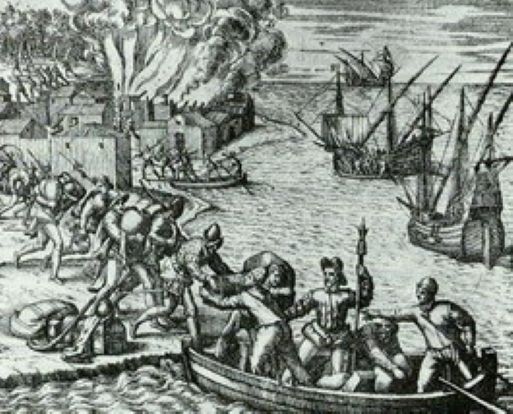
against their enemy. One city these pirates sacked
was Nombre de Dios in 1537. Four years later, they
looted Margarita pearl farms. François le Clerc (also known
as Jambe de Bois or Peg Leg) attacked villages along
the coasts of Puerto Rico and Hispaniola. In 1554,
he sacked Santiago de Cuba. One of his captains,
Jacques de Sores, remained in the Caribbean after le
Clerc returned to France. Sores laid siege to Havana
in July 1555, eventually capturing it, plundering
the houses and desecrating churches, then torching
the city. When he captured a ship off the Canary
Islands in 1570, he tossed forty Jesuits overboard,
whether they were alive or dead. He also jettisoned
any holy images, bibles, and relics he found about
the Portuguese vessel.
In the early decades of the next century, Diego the Mulatto sailed with
Cornelius Corneliszoon Jol
(also known as Piede Palo or Wooden Leg) and Pierre le Grand. In 1637,
Diego captured Thomas Gage, a Catholic priest from
England, on his way to Havana. Since Diego’s mother
resided there, he invited Gage to dinner and asked
him “to remember him to her, and how that for her
sake he had used well and courteously in what he
did.” He also recited a Spanish proverb: Hoy por
me, mañana for ti – Today for me, tomorrow for
you. (Little, How, 81)
Jean le Vasseur, who oversaw Tortuga, a haven for the
buccaneers, was a French Protestant with a great
hatred for all things Catholic. When Spaniards fell
into his hands, they “were likely to find themselves
subjected to an Inquisition-like torture in one of
his dungeons or cages (one of which he called
‘Purgatory’).” (Lane, 100) Although his primary
motives for such treatment involved financial gain,
perhaps religion played a small role in why he
subjected these prisoners to such vile treatment.
In contrast, when Bertrand d’Ogeron became governor
of Tortgua in 1665, he arranged
for two priests to accompany a boatload of French
maidens from France because he wanted the buccaneers
to settle down. When the women came ashore, each
buccaneer introduced himself and selected a willing
woman. The priests then sanctified their union.
Laurens Prins, a Dutch corsair
who sailed the Caribbean and South Sea, was more
akin to le Vasseur in his treatment of Catholic
clerics. In 1670, he attacked Granada prior to
joining Henry Morgan on his voyage to sack Panama.
After seizing control of Granada, Prins demanded a
ransom of 70,000 pesos. “[H]e made havoc and a
thousand destructions, sending the head of a priest
in a basket and saying that he would deal with the
rest of the prisoners in the same way,” according to
a Spanish account. (Earle, 151)
The buccaneers often used Petit Goave as a safe haven.
The first church was built there in 1670. In 1685, two Capuchin monks ministered to
the Catholic residents. Few firsthand accounts,
written either by the buccaneers themselves or their
contemporaries, rarely mention how English
buccaneers worshipped, but Basil Ringrose cited two
instances in his journal. A comrade of William Dampier and Lionel Wafer, he wrote on 9
January 1681:
This day
was the first Sunday that ever we kept by
command and common consent since the loss and
death of our valiant commander, Captain Sawkins.
This generous-spirited man threw the dice
overboard, finding them in use on the said day.
(Esquemeling, 398)
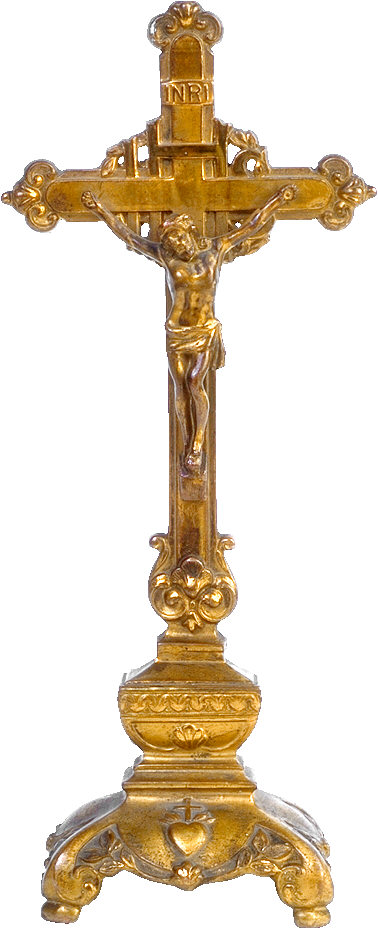 Although
French and English buccaneers formed alliances
against Spanish towns and villages in the New World,
religious differences sometimes caused problems. On
one such expedition, Raveneau de Lussan, a flibustier
and chronicler, noted that although the English
pirates might observe the Sabbath and sing Psalms,
they had Although
French and English buccaneers formed alliances
against Spanish towns and villages in the New World,
religious differences sometimes caused problems. On
one such expedition, Raveneau de Lussan, a flibustier
and chronicler, noted that although the English
pirates might observe the Sabbath and sing Psalms,
they had
absolutely
no scruples, when entering churches, against
knocking down crucifixes with their sabres,
firing guns and pistols, and breaking and
mutilating the images of saints with their arms,
scoffing at the veneration in which Frenchmen
hold them. (Little, Buccaneer’s,
108)
In contrast, after de
Lussan and his fellow flibustiers captured
Granada, they marched to the cathedral and
celebrated with a Te Deum. They also
preferred to ask “God ardently for victory and
silver” before any plundering endeavor. (Little, Buccaneer’s,
108)
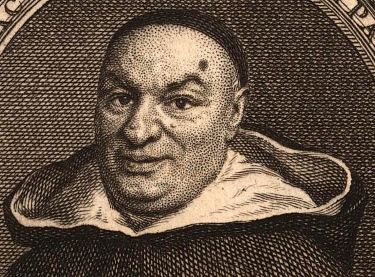 Jean-Baptiste Labat, a
Dominican priest who went to the Caribbean to
replace one of the missionaries who had died during
an epidemic, arrived in Martinique in 1694. In March
of that year, he presided over mass at the behest of
a flibustier captain and crew in the harbor
of Saint-Pierre. He claimed that rather than
desecrating Catholic relics, they “fired salvoes at
appropriate points during his ceremony and a portion
of their booty was donated to the Church.” (Marley,
672) Jean-Baptiste Labat, a
Dominican priest who went to the Caribbean to
replace one of the missionaries who had died during
an epidemic, arrived in Martinique in 1694. In March
of that year, he presided over mass at the behest of
a flibustier captain and crew in the harbor
of Saint-Pierre. He claimed that rather than
desecrating Catholic relics, they “fired salvoes at
appropriate points during his ceremony and a portion
of their booty was donated to the Church.” (Marley,
672)
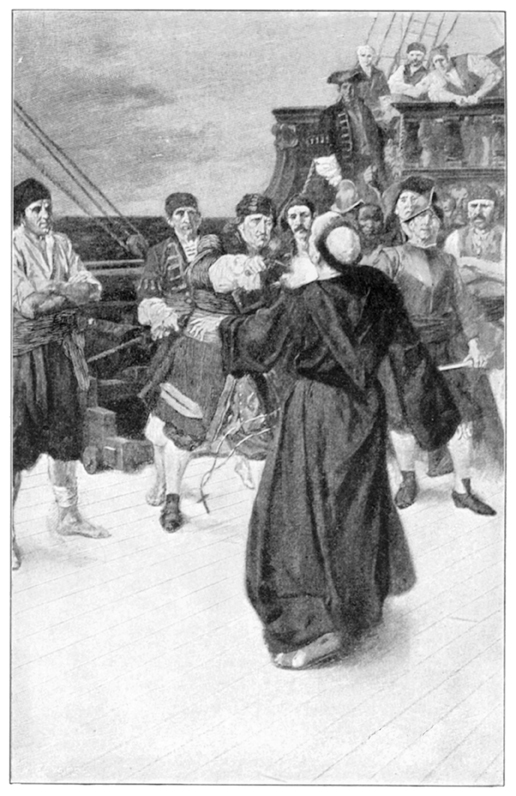 While
Catholic buccaneers might treat those who had taken
holy vows kindly, Ringrose wrote of one instance
when his fellow English buccaneers did not. While
Catholic buccaneers might treat those who had taken
holy vows kindly, Ringrose wrote of one instance
when his fellow English buccaneers did not.
That day
we cried out all our pillage, and found that it
amounted to 3,276 pieces-of-eight, which was
accordingly divided by shares amongst us. We
also punished a friar, who was chaplain to the
bark aforementioned, and shot him upon the deck,
casting him overboard before he was dead.
(Esquemeling, 360)
Ringrose didn’t agree
with this type of cruelty, but his opinion wasn’t
strong enough to sway his comrades.
Alexandre Exquemelin, a pirate
surgeon who wrote The
Buccaneers of America, “reported that rovers
prayed before eating – filibusters recited the Canticle of Zachariah, the Magnificat, and the Miserere, while the ‘pretended
reformers’ (Huguenots, or most of the
English and Dutch) read a chapter from the Bible and
recited Psalms.” Such practices pertained only to
the 1660s, because later periods of buccaneering
make no mention of “formal religious practice.”
(Little, Buccaneer’s, 108)
In the final decade of the seventeenth century, some
pirates forsook the Caribbean and headed for the
Indian Ocean to plunder ships carrying Muslims on
their annual pilgrimage to Mecca. Darby Mullins was
one of the few men who remained loyal to William Kidd and hanged with
him in 1701. When he confessed to Ordinary Lorrain,
prior to his death, this Irishman revealed “that he
didn’t know that it was unlawful to plunder the
ships of Moslems.” (Zacks, 386) Philip Gosse, a
pirate historian, paraphrased Mullins’ words more
succinctly:
. . . he
went to New York, where he met Captain Kidd, and
was, according to his own story, persuaded to
engage in piracy, it being urged that the
robbing only of infidels, the enemies of
Christianity, was an act, not only unlawful, but
one highly meritorious. (Gosse, 229)
When these ships returned
to India, they carried vast amounts of silk, jewels,
silver and gold. The greatest haul came in 1695 when
Henry Every and his men captured Gang-i-Sawai,
whose plundered treasure has been valued in excess
of $1,000,000.
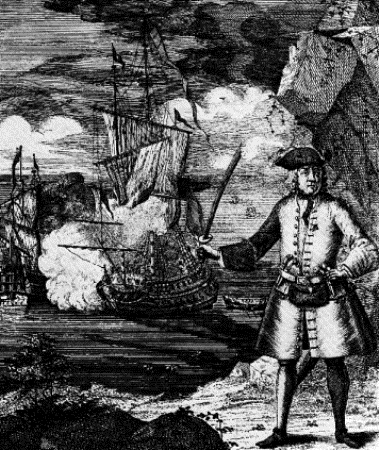 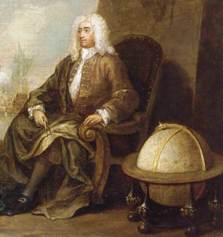
Captain Avery takes the Great
Moghul's Ship by unknown artist
Close-up of Woodes Rogers in William
Hogarth's painting of the governor and his
family
(Sources: Dover's Pirates and Wikimedia Commons)
In 1709, Woodes Rogers sailed around
the world on a privateering cruise. After rounding
Cape Horn, he put in at Juan Fernandez Island where
he found Alexander Selkirk. The privateer from
William Dampier’s expedition had been marooned on
the island for four and a half years. In his journal
Rogers wrote:
[he]
employ’d himself in reading, singing Psalms, and
praying; so that he said he was a better
Christian while in this Solitude than ever he
was before, or than, he was afraid, he should
ever be again. (Rogers, 72)
Years later, while
attempting to persuade the pirates of New Providence to
accept the king’s pardon and retire from plundering,
Rogers included literature from the Society of the Promotion of
Christian Knowledge as part of his arsenal. It
probably wasn’t a particularly successful technique,
but knowing the pirates easily outnumbered him, he
could ill afford not to try any means necessary to
achieve his goal.
Darby Mullins wasn’t the only one who thought there
was nothing wrong with attacking non-Christian
ships. In 1719, Turner Stevens, a gunner aboard
George Shelvocke’s privateer Speedwell, suggested
they sail for the Red Sea, rather than Spanish
waters, because “there could be no harm in robbing
the Mahometans, whereas the Spaniards were good
Christians, whom it was a sin to injure.”
(Shelvocke, 34) Shelvocke, however, heeded his
letter of marque and attacked Spanish towns and
vessels. Oftentimes when pirates failed to receive
their ransoms, they torched the towns without caring
what burned. When Shelvocke captured Payta in 1720,
he didn’t want to burn the churches, but he did
order his men to set fire to several houses in the
town.
. . . the
governor was determined not to ransom the town,
and did not care what became of it, provided the
churches were not burnt. Though I never had any
intention to destroy any place devoted to divine
worship, I answered that I should have no regard
to the churches, or anything else, when I set
the town on fire. . . . This seemed to make a
great impression, and he promised to return in
three hours with the money. (Shelvocke, 92)
Whereas English pirates
of the previous century observed the Sabbath and
sang Psalms, not so the pirates who followed Howell Davis. Captain William Snelgrave made their
acquaintance in 1718 when they took his ship off
Sierra Leone.
The
execrable oaths and blasphemies I heard among
the ship’s company, shocked me to such a degree,
that in Hell its self I thought there could not
be worse; for though many seafaring men are
given to swearing and taking God’s name in vain,
yet I could not have imagined human nature could
ever so far degenerate, as to talk in the manner
those abandoned Wretches did. (Konstam and
Rickman, 36)
Nor were some pirates
inclined to treat priests as the French corsairs of
Martinique had done several decades earlier. Edward Low, not known for his
kind treatment of prisoners (especially those
audacious enough to fight back), reserved a special
punishment for two friars taken in 1722 when he
captured the galley Wright.
. . .
because at first they shewed Inclinations to
defend themselves and what they had, the Pyrates
cut and mangled them in a barbarous Manner;
particularly some Portuguese Passengers, two of
which being Friers, they triced up at each Arm
of the Fore-Yard, but let them down again before
they were quite dead, and this they repeated
several Times out of Sport. (Defoe, 324)
In June of that year, Philip Ashton became another
captive of Ned Low’s. In his memoir of his time with
the pirates, he frequently attributed the saving of
his life to God’s intervention. He also noted that
“every thing that had the least face of Religion and
Virtue was entirely banished.” (Rediker, Between,
176)
 What of
pirates in other parts of the world? Jean-Baptiste Tavernier, a
French traveler, recounted a tale involving
Malabaris, pirates who preyed in Indian waters. They
were Muslims with little tolerance for Christians. What of
pirates in other parts of the world? Jean-Baptiste Tavernier, a
French traveler, recounted a tale involving
Malabaris, pirates who preyed in Indian waters. They
were Muslims with little tolerance for Christians.
I have
seen a Barefoot Carmelite Father who had been
captured by these pirates. In order to obtain
his ransom speedily, they tortured him to such
an extent that his right arm became half as
short as the other, and it was the same with one
leg. (Little, Pirate, 240)
Unlike their western
counterparts, Chinese pirates never became enmeshed
in religious conflicts. They prayed to dieties,
called Joss, before sailing.
Zhang Bao, who was Zheng Yi Sao’s lover and
husband after the death of his adopted father, had a
temple constructed aboard his flagship. He and his
men gathered before each venture and burned incense
and sought signs that each would succeed. They
frequently visited temples whenever they were ashore
and donated to the priests who tended the temples.
The pirates frequently stopped at the Hui-chou’s
temple, made famous because its deity was noted for
miracles. Legend says several pirates decided to
take the idol with them, but were unable to remove
it from the pedestal upon which it sat. At least not
until Zhang Bao touched it. Once he did, they had no
problem transporting it to their junks.
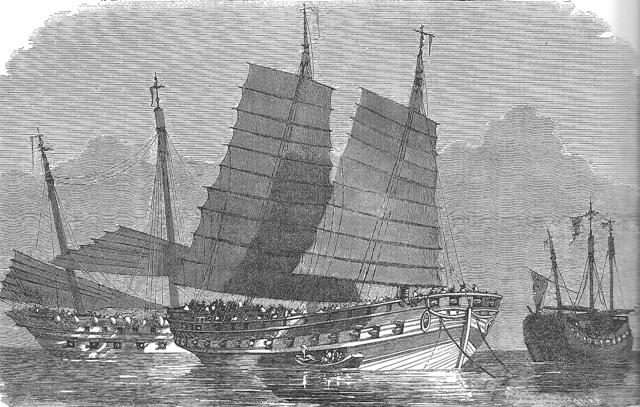
Chinese war junks in 1857
(Source: Dover's Nautical Illustrations)
Although the gods frequently indicated Zhang Bao’s
plans would succeed, every once in awhile, they did
not. On one occasion, his junk anchored near four
guardhouses made out of mud where he waited for two
days. One the third, the forts defending the town
fired on him, but he never returned fire because the
Joss indicated he would fail in this
endeavor. At another time in 1809, he lost 300 men
in an attack. So he consulted the Joss,
which recommended he retreat. The day after Zhang
Bao ceased the attack, strong winds permitted his
men to break through the blockade and sail away.
In 1858, Fanny Loviot published an account of her capture by and
time with Chinese pirates near Hong Kong. In this
book she described their evening prayer ceremony.
Every junk
. . . is furnished with an altar. On this altar
they burn small wax-lights, and offer up
oblations of meat and drink. They pray every
night at the same hour, and begin with a hideous
overture played upon gongs, cymbals, and drums
covered with serpent skins.
First of all, I
saw a young Chinese come forward with two
swords, which he stuck upright in the very
centre of the deck. Beside these he then placed
some saucers, a vase filled with liquid, and a
bundle of spills, made of yellow paper, and
intended for burning. A lighted lantern was next
suspended to one of the masts, and the chief
fell upon his knees before the shrine.
After chanting for some time, he took up the
vase and rank; and next proceeded, with many
gesticulations, to chink a lot of coins and
medals together in his hands. The paper spills
were then lighted and carried round and round
the swords, as if to consecrate them. These
ceremonies completed, the captain rose from his
knees, came down to the after-part of the junk,
waved the burning papers to and fro, and threw
them solemnly into the sea. The gongs and drums
were now played more loudly, and the chief
seemed to pray more earnestly than ever; but as
soon as the last paper was dropped, and the last
spark extinguished, the music ceased, the prayer
came to an end, and the service was over.
Altogether it had taken quite twenty minutes . .
. . (Loviot, 110-111)
After reading these
examples, one soon comes to the conclusion that not
all pirates forsook their beliefs in a higher power.
Some were immoral. Others zealously championed their
faiths. Still others strayed from a righteous path
until faced with death. To depict all pirates as
godless men contradicts reality. It is also
inaccurate to say that regardless of the time period
religion has little to do with piracy. Before these
men (and women) go on the account, religion plays an
important role in their daily lives. Just because
they become pirates doesn’t negate its impact on
them. William Fly, who stands trial
for piracy in 1726, has several conversations with
the Reverend Cotton Mather, who wishes for Fly to
confess his sins. Mather wants Fly to forgive the
man who betrays him and equates malice against
someone as being as great a sin as lying. Fly
indicates that to forgive will be wrong: “I won’t dy
with a Lye in my mouth.” (Mather, 16) As Emily
Collins points out in her senior thesis on religion
and piracy in the eighteenth century, sometimes a
pirate does believe but perhaps not according to the
tenets of a particular religion:
Fly
continued to illustrate his piety when he stated
that he read The Converted Sinners book, about
piety, before he was brought in and convicted .
. . . At the same time he stated this, Fly was
holding the Bible in his hands. Even though Fly
never confessed to being a pirate or repented
his sins before his final hour, it is quite
apparent through his dialogue that he was a man
who did have knowledge and respect of religion.
(Collins, 8)
For additional information, please see:
Antony,
Robert J. Pirates in the Age of Sail. W.
W. Norton, 2007.
Appleby, John C. Under
the Bloody Flag. The History Press, 2009.
Bromley, J. S.
“Outlaws at Sea, 1660-1720: Liberty, Equality, and
Fraternity among the Caribbean Freebooters” in Bandits
at Sea edited by C. R. Pennell. New York
University, 2001.
Collins, Emily E. Eyes
on God and Gold: The Importance of Religion
during the Golden Age of Caribbean Piracy.
[unpublished thesis] University of North Carolina,
2004.
Coote, Stephen. Drake.
Thomas Dunne, 2003.
Cordingly, David. Under
the Black Flag. Random House, 1995.
Defoe, Daniel. A
General History of the Pyrates. Dover, 1999.
Dudley, William G. Drake:
For God, Queen, and Plunder. Brassey’s,
2003.
Earle, Peter. The
Pirate Wars. Thomas Dunne, 2003.
Esquemeling, John. The
Buccaneers of America. Rio Grande Press,
1992.
Gosse, Philip.
The Pirates’ Who’s Who. Rio Grande Press,
1924.
Greene, Molly. Catholic
Pirates and Greek Merchants. Princeton,
2010.
Kinkor, Kenneth
J. “Black Men under the Black Flag” in Bandits
at Sea edited by C. R. Pennell. New York
University, 2001.
Konstam, Angus. Piracy:
The Complete History. Osprey, 2008.
Konstam, Angus. The
World Atlas of Pirates. Lyons Press, 2009.
Konstam, Angus, and
David Rickman. Pirate: The Golden Age.
Osprey, 2011.
Lane, Kris E. Pillaging
the Empire. M. E. Sharpe, 1998.
Little, Benerson. The
Buccaneer’s Realm. Potomac, 2007.
Little, Benerson. How
History’s Greatest Pirates Pillaged, Plundered,
and Got Away with It. Fair Winds Press,
2011.
Little, Benerson. Pirate
Hunting. Potomac, 2010.
Loviot, Fanny. A
Lady’s Captivity among Chinese Pirates.
National Maritime Museum, 2008.
Magnus Magnusson. Vikings!
E.P. Dutton, 1980.
Marley, David F. Pirates
of the Americas. ABC-CLIO, 2010.
Mather, Cotton. The
Vial Poured Out Upon the Sea . . . .
Boston, 1726.
Murray, Dian H. Pirates
of the South China Coast 1790-1810.
Stanford, 1987.
Rediker, Marcus. Between
the Devil and the Deep Blue Sea. Cambridge,
1999.
Rediker, Marcus. Villains
of All Nations. Beacon Press, 2004.
Rogers, Woodes. A
Cruising Voyage Round the World. Narrative
Press, 2004.
Rose, Jamaica, and
Captain Michael MacLeod. The Book of Pirates.
Gibbs Smith, 2010.
Sanders, Richard. If a
Pirate I Must Be . . . . Skyhorse, 2007.
Shelvocke, George. A
Privateer’s Voyage Round the World.
Seaforth, 2010.
Thomas, Graham A. Pirate
Hunter. Pen & Sword, 2009.
Weiss, Gillian. Captives
and Corsairs. Stanford, 2011.
Zacks, Richard. The
Pirate Hunter. Hyperion, 2002.
Copyright ©
2012 by Cindy Vallar

Click to contact me
Background image compliments
of Anke's Graphics |